Desert Cats in the First Gulf War
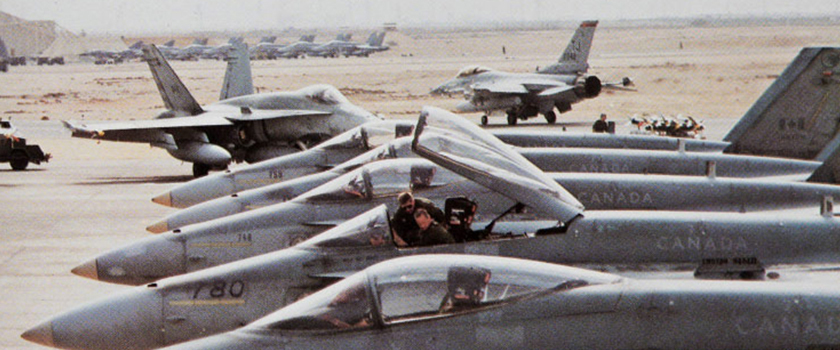 Personnel from Air Command and Canadian Forces Europe deployed during the first week of October 1990 as part of the United States led United Nations operation against Iraq. Resolution 678 made this a chapter seven war fighting venture.
The Desert Cats
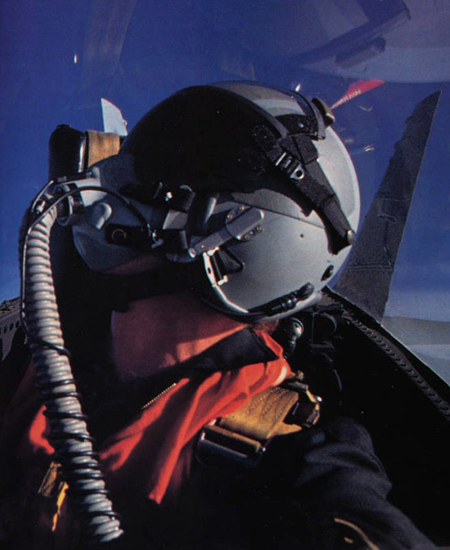 Within hours of arriving in the gulf CF-18s were patrolling the skies off the coast of Kuwait protecting coalition ships enforcing the embargo.
The Desert Cats were formed by a joining of 439 Tiger Squadron and 416 Lynx Squadron. During the war, the cats with their 26 CF-18s shared the Doha airport with the Qatar Emiri air force of 24 Mirages and Alpha jets, 8 French Mirage fighters and 24 American F-16s. There were also daily Canadian transport and refuelling aircraft flying into and from Doha. It was a busy place.
As tension mounted in November and December a great deal of work went into making bomb shelters for protection from air attack or ballistic missile attack–concerns about chemical and biological weapons were real and warranted.
The groundcrew kept the jets in great shape - there were always 25 F-18s ready to fly. An incredible accomplishment and one of which we were all extremely proud.
When the war started, the desert cats flew combat air patrols. The majority of the missions were flown over the gulf, to protect the navy ships from attack by Iraqi aircraft or fast patrol boats. It was about 500 kilometres from the base in Doha to the combat air patrol patterns over the gulf off Kuwait city.
One week into the war the cats started flying sweep escort missions. They would fly in the lead of large packages of fighter bombers hitting targets in Iraq. The role was to attack Iraqi fighters that came up to attack.
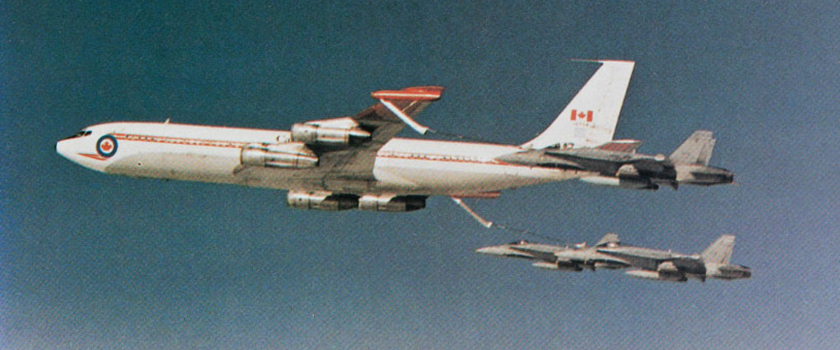 As the coalition forces prepared for the ground attack, the cats were assigned another new role-participate in the aerial bombardment of the Iraqi army. They took off two fuel tanks and reduced the number of missiles carried in order to upload 8,500 pound bombs. In just four days of the ground war the cats dropped over 100 tons of bombs.
Flexibility, well trained crews and a desire to maintain the high standards the RCAF had demonstrated through the years were some of the key ingredients that led to this victory – namely mission accomplished with no fatalities.
Desert Cats Book
The Canadian Fighter Squadron in the Gulf War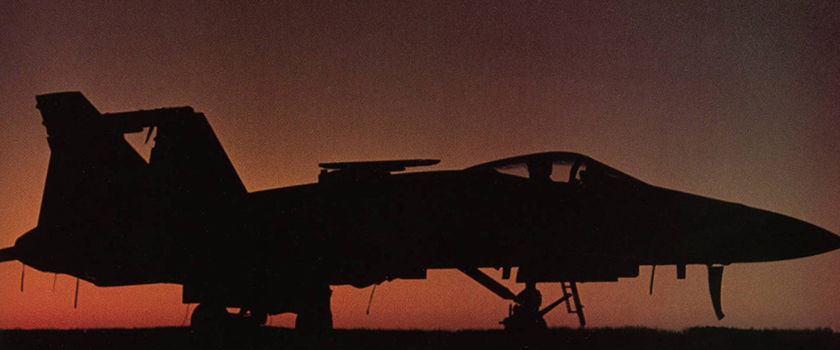 Soon after the Gulf War ended in 1991, a definitive account of the Canadian CF-18 Squadron that took part in the conflict was published. It was edited by Capt. David N. Deere and contains a collection of memoirs and photos taken during the conflict.
Deset Cats: The Canadian Fighter Squadron in the Gulf War
Note: the following link opens a digital copy of the Desert Cats book, courtesy of the UofC Libraries and Cultural Resources Digital Collections
Note: the following link opens a digital copy of the Desert Cats book, courtesy of the UofC Libraries and Cultural Resources Digital Collections